
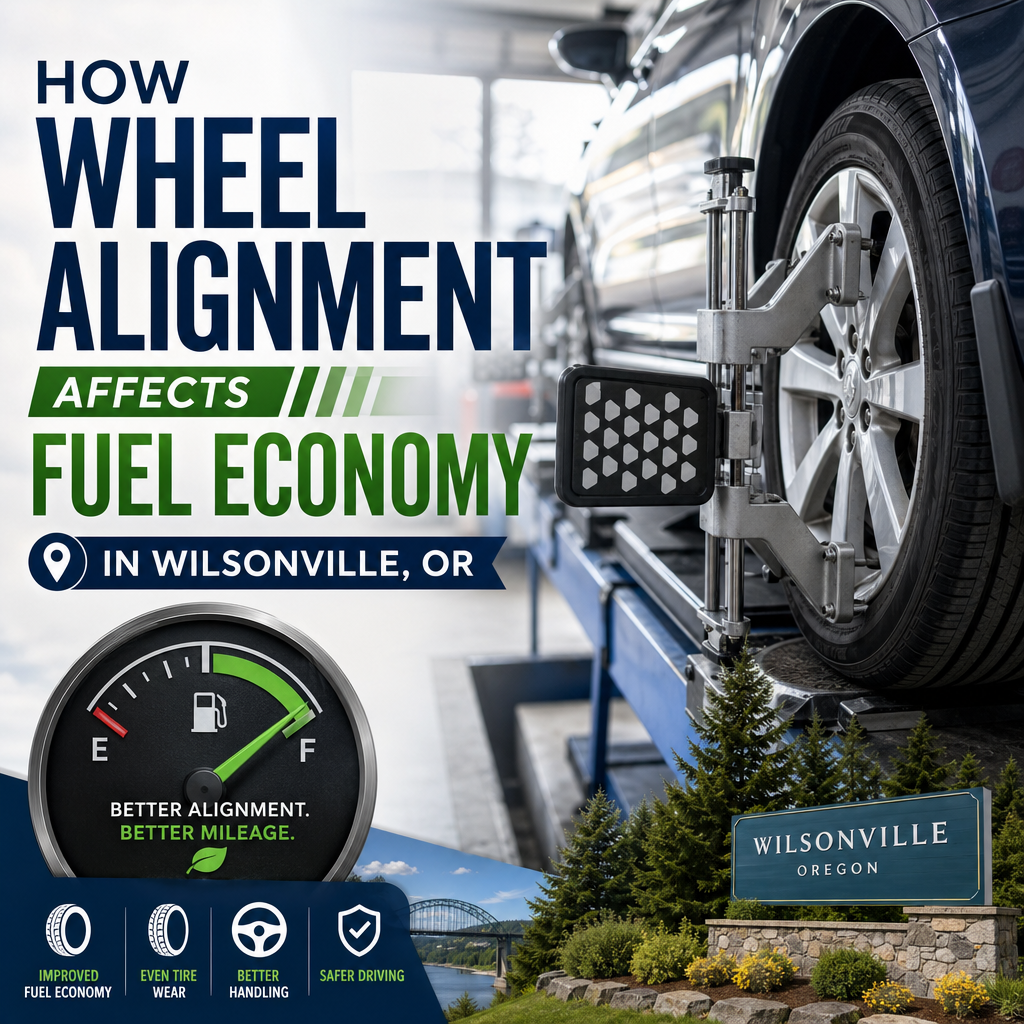
How Wheel Alignment Affects Fuel Economy in Wilsonville, OR
How Wheel Alignment Affects Your Fuel Economy in Wilsonville, OR
When drivers in Wilsonville, OR think about saving money at the pump, they often focus on gas prices, traffic, or the type of vehicle they drive. But one of the most overlooked ways to improve fuel efficiency is also one of the simplest: proper wheel alignment. A car that is out of alignment has to work harder to move down the road, and that extra effort can quietly reduce your fuel economy over time.
If you have noticed rising fuel costs, uneven tire wear, or your vehicle pulling to one side, it may be time to look at your alignment. Understanding the connection between wheel alignment and fuel efficiency can help you protect your vehicle and keep more money in your pocket.
What Wheel Alignment Means
Wheel alignment refers to the angle and position of your vehicle’s wheels relative to each other and the road. It is not about adjusting the tires themselves, but rather the suspension components that control how the wheels sit.
The main alignment angles include:
- Camber: the inward or outward tilt of the wheels
- Toe: whether the wheels point inward or outward
- Caster: the angle of the steering axis, which affects stability
When these angles are set correctly, your tires roll smoothly and evenly. When they are off, your vehicle may not track straight, and your tires can drag rather than roll efficiently.
How Misalignment Hurts Fuel Economy
A vehicle with poor alignment creates more resistance as it moves. That extra resistance forces the engine to use more energy to maintain speed, which can lead to lower miles per gallon.
Here’s how misalignment affects fuel efficiency:
Increased Rolling Resistance
When your wheels are not pointed in the right direction, your tires scrub against the road instead of rolling cleanly. This increases rolling resistance, and your engine must work harder to overcome it.
Uneven Tire Wear
Misalignment causes tires to wear unevenly, which reduces their lifespan. Worn tires do not grip and roll as efficiently, and that can further hurt fuel economy.
Poor Steering Response
If your vehicle feels sluggish or pulls to one side, you may find yourself making constant steering corrections. Even small adjustments over time can increase drag and reduce efficiency.
Extra Strain on Suspension Components
Alignment problems can also place added stress on suspension and steering parts. While this does not directly burn fuel, it can contribute to overall vehicle inefficiency and more expensive repairs later.
Signs Your Alignment May Be Off
Many drivers do not realize their alignment is a problem until the symptoms become obvious. Watch for these common warning signs:
- Your car pulls left or right while driving straight
- The steering wheel is off-center
- Tires wear unevenly or more quickly than expected
- You hear squealing from the tires
- The steering feels loose or unresponsive
- Your fuel economy seems lower than usual
If you notice one or more of these issues, an alignment check can help determine whether the problem is affecting your vehicle’s efficiency.
Why This Matters in Wilsonville, OR
Driving conditions in Wilsonville can contribute to alignment issues over time. Local roads, potholes, curb bumps, and everyday stop-and-go driving can all knock wheels out of proper position. Even a minor impact from a parking lot curb or rough road surface can be enough to change alignment angles.
For drivers who commute, run errands around town, or take frequent trips on nearby highways, keeping alignment in check is a practical way to reduce fuel waste. In a city where many households are watching transportation costs closely, small improvements in efficiency can make a real difference.
How Often Should You Check Wheel Alignment?
There is no one-size-fits-all answer, but a good rule is to have your alignment checked:
- At least once a year
- After hitting a pothole or curb
- Whenever you install new tires
- If you notice steering or handling problems
- After suspension or steering repairs
Regular tire rotations and proper inflation also support fuel economy, but alignment remains a key part of the equation. Even well-maintained tires cannot perform efficiently if the wheels are not properly aligned.
Simple Habits That Help Preserve Fuel Economy
In addition to alignment maintenance, a few driving and maintenance habits can help you get better mileage:
- Keep tires inflated to the recommended pressure
- Rotate tires regularly
- Avoid aggressive acceleration and hard braking
- Reduce unnecessary weight in your vehicle
- Schedule routine inspections for steering and suspension parts
These steps work together to reduce strain on your vehicle and improve overall efficiency.
The Bottom Line
Wheel alignment plays a bigger role in fuel economy than many drivers realize. When your wheels are properly aligned, your car rolls more smoothly, your tires last longer, and your engine does not have to work as hard. Over time, that can lead to noticeable fuel savings.
For drivers in Wilsonville, OR, staying ahead of alignment issues is a smart way to improve performance, protect your tires, and spend less at the pump. If your vehicle is pulling, wearing tires unevenly, or costing more to fill up, a wheel alignment check could be the solution.