

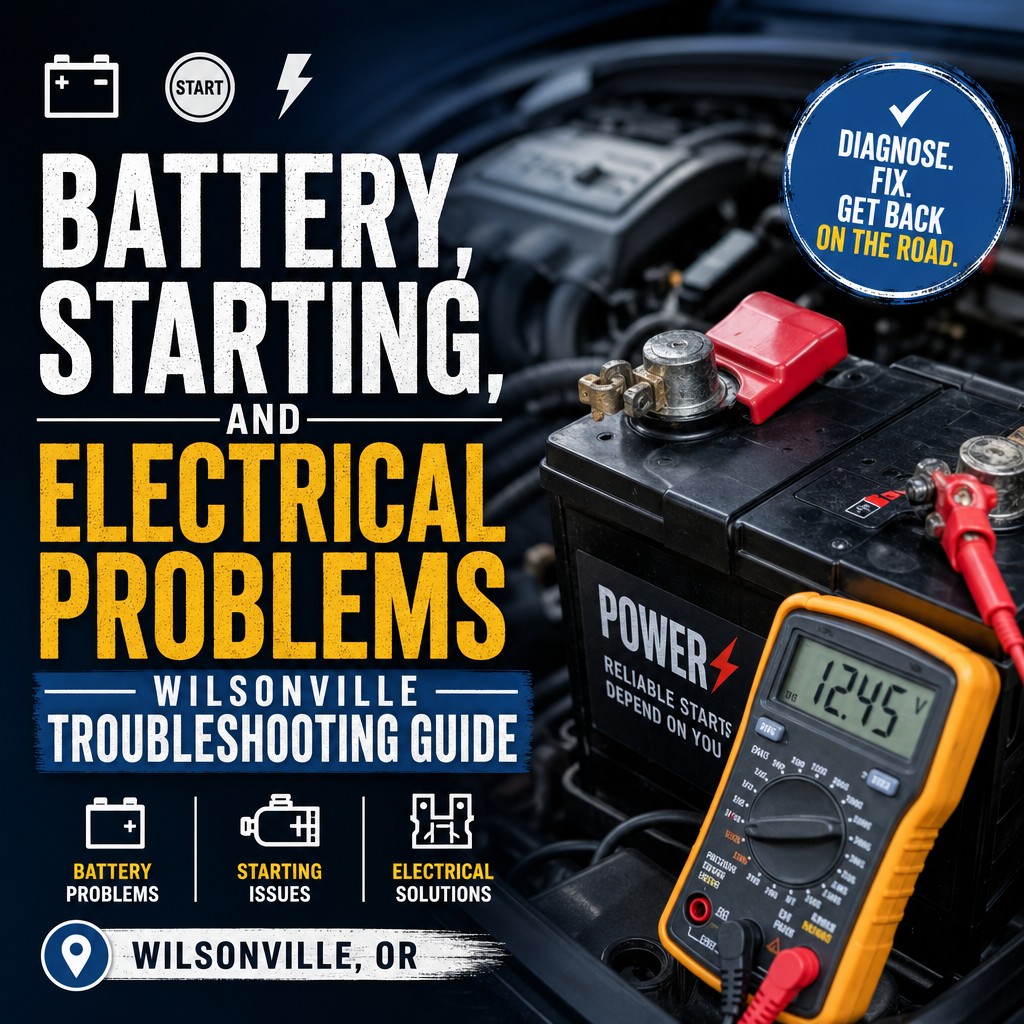
Battery, Starting, and Electrical Problems: Wilsonville Troubleshooting Guide
Battery, Starting, and Electrical Problems: A Wilsonville Troubleshooting Guide
Few things are more frustrating than turning the key in your car and getting nothing in response. Whether you’re heading to work, picking up groceries, or getting the kids to school, battery, starting, and electrical problems can bring your day to a sudden stop. In Wilsonville, where commutes and busy schedules leave little room for car trouble, knowing the warning signs and basic troubleshooting steps can save time, money, and stress.
This guide covers the most common symptoms, likely causes, and when it’s time to call a professional.
Why These Problems Often Show Up Together
Battery, starting, and electrical systems are closely connected. If one part fails, it can affect the others. A weak battery may not provide enough power to start the engine. A bad starter may keep the engine from turning over. Electrical issues, such as damaged wiring or a failing alternator, can cause both problems and create confusing symptoms.
That’s why diagnosing these issues can be tricky. A dead battery isn’t always the real cause, and a clicking noise doesn’t always mean the battery is bad.
Common Signs of Trouble
Recognizing the symptoms early can help you avoid getting stranded. Watch for these warning signs:
- Slow engine cranking when starting
- Clicking sounds when turning the key
- Dashboard lights that dim or flicker
- Headlights that appear unusually weak
- Electrical accessories not working properly
- A battery warning light on the dashboard
- Burning smells or visible corrosion near the battery
- Frequent jump-starts needed to get the car running
If you notice one or more of these issues, your vehicle may need immediate attention.
Battery Problems: What to Check First
The battery is often the first place to start troubleshooting. It provides the power needed to start your vehicle and supports electrical components when the engine is off.
Signs of a Weak or Dead Battery
A battery that’s near the end of its life may struggle to hold a charge. Common signs include:
- The engine cranks slowly
- Interior lights seem dim
- The car won’t start after sitting overnight
- The battery is more than three to five years old
Cold weather, short trips, and leaving lights on can all shorten battery life. In Wilsonville, frequent stop-and-go driving can also put extra strain on the battery.
Quick Battery Checks
You can do a few simple checks at home:
- Make sure the battery terminals are clean and tight.
- Look for corrosion, which appears as white or blue buildup.
- Check whether the battery case looks swollen or damaged.
- Confirm that interior lights and dashboard lights are working.
If the battery looks fine but the car still won’t start, the problem may lie elsewhere.
Starting System Issues
If you hear a click but the engine doesn’t turn over, the starter may be the problem. The starting system includes the ignition switch, starter motor, and related wiring.
Common Starter Symptoms
A failing starter may cause:
- A single click or repeated clicking
- No sound at all when the key is turned
- Intermittent starting problems
- Smoke or a burning smell after repeated attempts
Sometimes a starter issue can seem like a battery problem. If the battery is fully charged but the vehicle still won’t start, the starter should be inspected.
What You Can Try
Before assuming the starter is dead:
- Try starting the vehicle in park and then in neutral
- Listen for any unusual noises
- Check whether the headlights and dash lights are on
- Use a jump-start only if the battery is likely weak
If these steps don’t help, professional diagnosis is the safest next move.
Electrical Problems That Affect Starting
Modern vehicles rely on complex electrical systems. A bad alternator, blown fuse, loose wire, or failing sensor can all cause starting trouble.
Alternator Warning Signs
The alternator charges the battery while the engine runs. If it fails, the battery may drain even after a fresh jump-start. Watch for:
- Battery warning light on the dashboard
- Dim headlights while driving
- Electrical systems cutting out
- A battery that keeps dying
Wiring and Fuse Issues
Damaged wiring or blown fuses can interrupt power to essential systems. These problems may cause:
- Power windows or radio not working
- Engine starting inconsistently
- Random dashboard warning lights
- Loss of power to specific accessories
Because electrical systems are interconnected, one failing component can create several symptoms at once.
Simple Troubleshooting Steps
Before scheduling repairs, try these basic steps:
- Check the battery terminals for corrosion or looseness
- Confirm the gear shift is fully in park or neutral
- Test whether headlights and interior lights work
- Listen closely for clicking, cranking, or silence
- Try a jump-start if the battery seems weak
- Look for dashboard warning lights
If the vehicle still won’t start, avoid repeated attempts. Too much cranking can drain the battery further and potentially damage electrical components.
When to Call a Professional
Some battery, starting, and electrical problems are straightforward. Others require specialized tools and experience. A trained technician can test the battery, starter, alternator, and electrical circuits to pinpoint the issue accurately.
You should seek professional help if:
- The car repeatedly fails to start
- Jump-starts only provide temporary relief
- You notice burning smells or smoke
- Electrical features are behaving unpredictably
- The battery and starter have already been ruled out
Stay Ahead of Unexpected Breakdowns
Regular maintenance can reduce the chance of being caught off guard. Have your battery and charging system checked during routine service, especially before colder months or long trips. Replacing a weak battery early is often far less stressful than dealing with a no-start situation in a parking lot.
For Wilsonville drivers, staying proactive is the best way to keep your vehicle dependable. By spotting warning signs early and knowing how the battery, starter, and electrical systems work together, you can avoid bigger problems down the road.
