
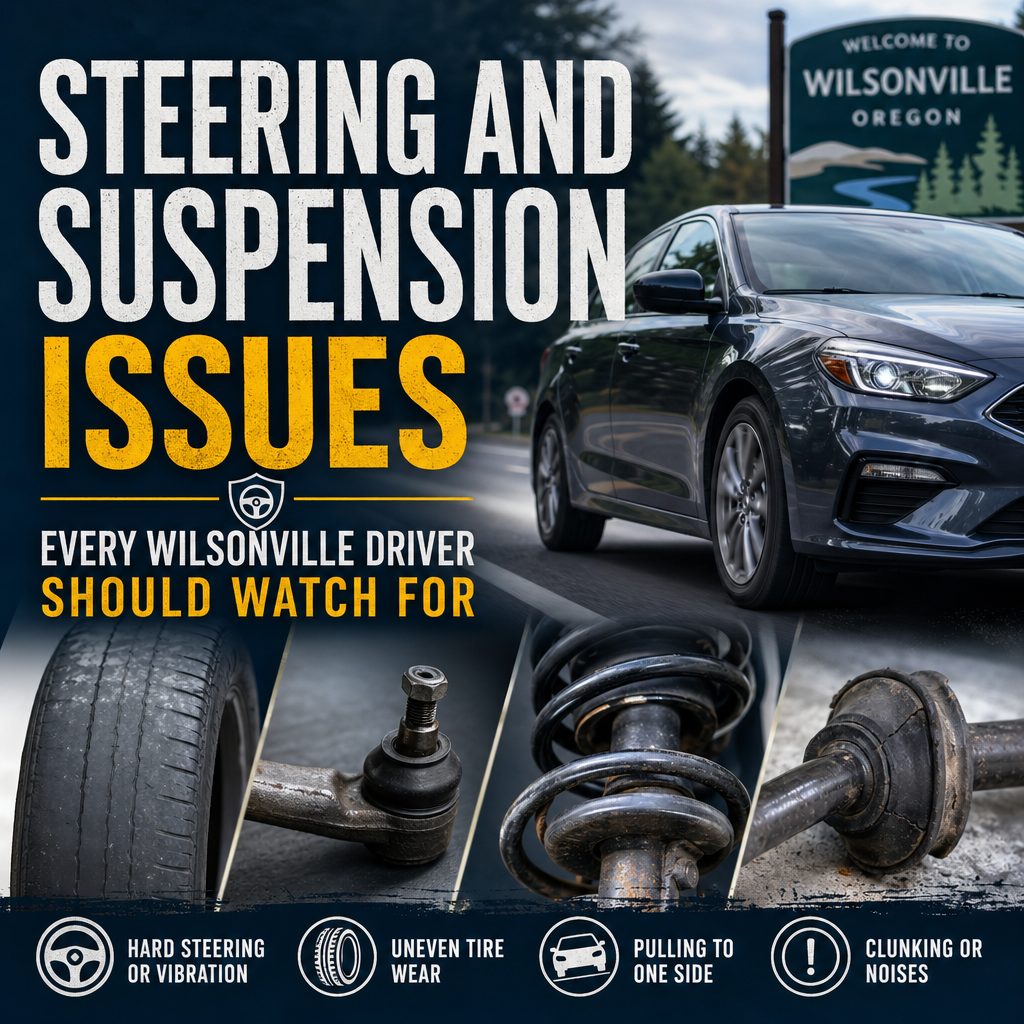
Steering and Suspension Issues Every Wilsonville Driver Should Watch For
Steering & Suspension Issues Every Wilsonville Driver Should Watch For
If you drive in Wilsonville, you already know your vehicle has to handle a mix of daily commuting, neighborhood streets, highway miles, rain, potholes, and the occasional rough road. That’s why paying attention to your steering & suspension issues is so important. These systems do more than keep your ride smooth—they help your vehicle stay stable, responsive, and safe.
When steering or suspension parts start to wear out, the warning signs often show up slowly. The good news is that if you know what to watch for, you can catch problems early and avoid bigger repairs later.
Why Steering and Suspension Matter
Your steering system helps you control the direction of your vehicle. Your suspension system supports the weight of the car, absorbs bumps, and keeps your tires in proper contact with the road.
Together, these systems affect:
- Handling and cornering
- Ride comfort
- Tire wear
- Braking stability
- Overall safety
If either system begins to fail, you may notice your vehicle feels less predictable. That can make everyday driving more stressful and more dangerous, especially in wet or crowded traffic conditions.
Common Signs of Steering Problems
Steering issues often start with small changes in how your car feels. A wheel that seems a little off or a vehicle that no longer responds as smoothly as it used to can be an early clue.
1. Hard or Stiff Steering
If turning the wheel suddenly feels harder than usual, something may be wrong with the power steering system, steering linkage, or another related component. This is especially noticeable when parking or making low-speed turns.
2. Loose or Wandering Steering
Does your vehicle feel like it drifts from side to side or requires constant correction? Loose steering can make it seem like the car is “floating” instead of tracking straight. This may point to worn steering components, alignment problems, or suspension wear.
3. Unusual Noises When Turning
Clunking, squealing, or groaning sounds while turning can indicate trouble. These noises may come from low power steering fluid, worn bushings, damaged joints, or failing steering parts.
4. Steering Wheel Off-Center
If the steering wheel sits crooked when driving straight, your alignment may be off. This can also be a sign of worn suspension components or other issues that should be checked promptly.
Suspension Warning Signs to Notice
Suspension problems often show up in the way your car rides over bumps, corners, and uneven pavement. Wilsonville drivers who travel on a variety of road surfaces may notice these symptoms sooner than expected.
1. Excessive Bouncing
After hitting a bump or pothole, your vehicle should settle quickly. If it keeps bouncing, shocks or struts may be worn out. This can affect braking and reduce stability.
2. Nose Dives or Rear-End Squats
When you brake, does the front of the car dip too much? Or does the rear sit low during acceleration? These are signs that suspension parts are no longer controlling weight transfer properly.
3. Uneven Tire Wear
Your tires can reveal a lot about suspension health. Uneven or rapid wear may indicate poor alignment, worn shocks or struts, or other suspension issues. If one side of a tire is wearing faster than the other, it’s worth getting inspected.
4. Vehicle Leaning to One Side
A car that sits lower on one side may have a broken spring, damaged suspension component, or another underlying issue. This should not be ignored, even if the vehicle still seems drivable.
What Causes These Issues?
Several everyday factors can contribute to steering and suspension wear:
- Hitting potholes or curbs
- Driving on rough or uneven roads
- Normal wear over time
- Poor alignment
- Worn shocks, struts, or bushings
- Leaking power steering fluid
- Damage from road debris
Even if your vehicle seems fine most of the time, these parts take a beating with regular use. Small problems can build up until they become noticeable behind the wheel.
Why You Shouldn’t Delay Repairs
Steering and suspension issues are not just comfort concerns. They can affect how well your tires grip the road, how your vehicle brakes, and how safely you can steer around obstacles.
Delaying repairs may lead to:
- Reduced control in wet conditions
- Faster tire wear
- Increased strain on other parts
- More expensive repairs later
- Greater safety risk on the road
Catching problems early often means simpler fixes and less downtime.
When to Have Your Vehicle Inspected
If you notice any of the warning signs above, it’s a smart idea to schedule an inspection soon. You should also have your steering and suspension checked if:
- You hit a major pothole or curb
- Your car pulls to one side
- The steering feels different than usual
- You hear new noises when turning or driving over bumps
- Your tires are wearing unevenly
Routine inspections can help spot wear before it turns into a breakdown or unsafe driving condition.
Stay Ahead of Trouble
For Wilsonville drivers, staying alert to steering and suspension changes is one of the easiest ways to protect your vehicle. A smoother ride is nice, but the real benefit is control, safety, and peace of mind.
If your car starts feeling off, trust your instincts. Small changes in steering or suspension behavior usually mean it’s time for a closer look. Addressing steering & suspension issues early can help keep your vehicle safer, your tires lasting longer, and your daily drive much more comfortable.