

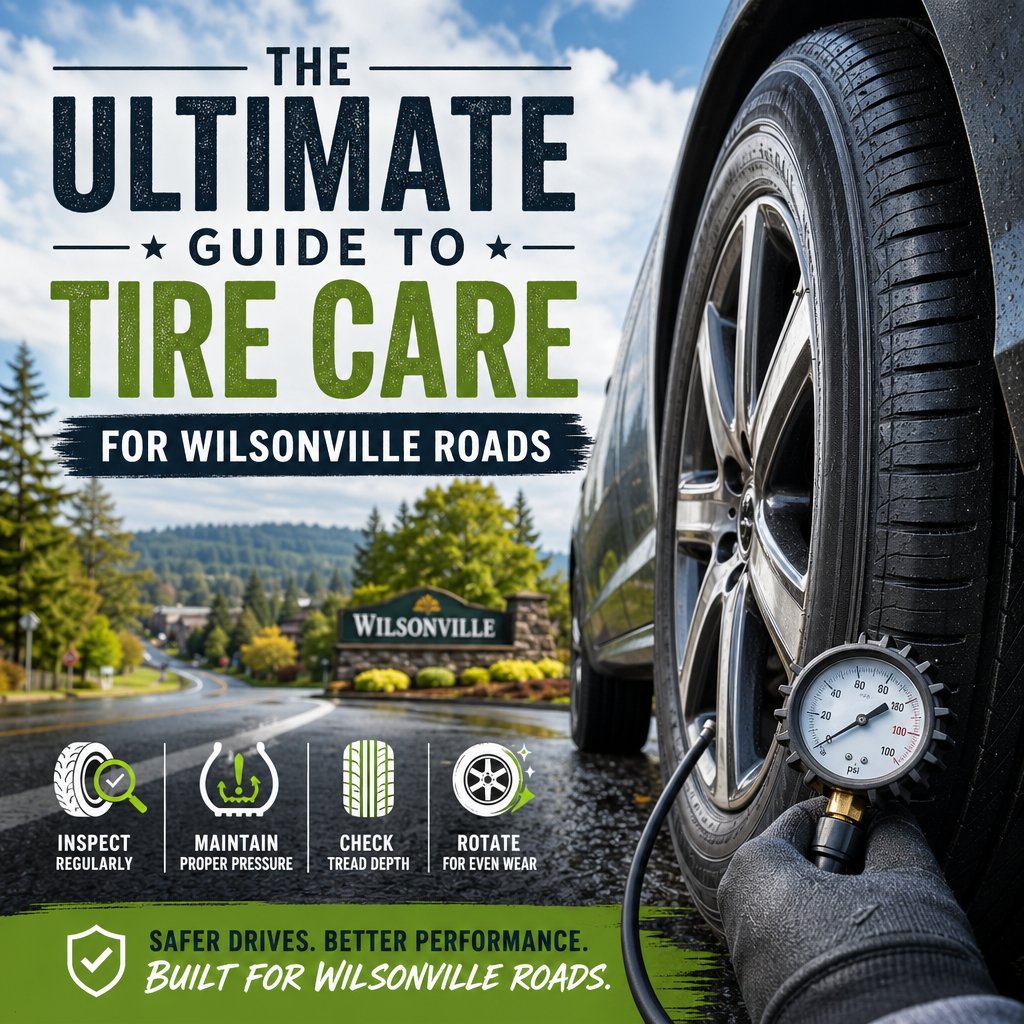
The Ultimate Guide to Tire Care for Wilsonville Roads
The Ultimate Guide to Tire Care for Wilsonville Roads
Driving in Wilsonville means dealing with a mix of rainy commutes, neighborhood streets, highway merges, and seasonal temperature changes. All of that can be hard on your tires. Good tire care is one of the simplest ways to improve safety, extend tire life, and keep your vehicle running smoothly. If you want better handling, fewer surprise repairs, and more confidence on the road, a solid tire care routine is essential.
Why Tire Care Matters in Wilsonville
Tires are the only part of your vehicle that actually touches the road. That means they play a major role in braking, steering, fuel economy, and comfort. On Wilsonville roads, where wet pavement and changing conditions are common, worn or underinflated tires can become a real risk.
Proper maintenance helps you:
- Improve traction on wet and dry roads
- Reduce the chance of blowouts or flats
- Extend tire lifespan
- Save money on fuel
- Keep your ride smoother and quieter
Even small habits can make a big difference over time.
Check Tire Pressure Regularly
One of the most important parts of tire care is monitoring tire pressure. Tires naturally lose air over time, and temperature swings can make the problem worse. In cooler weather, pressure often drops, while warmer days can change readings too.
How to do it
Check tire pressure at least once a month and before long drives. Use a reliable tire gauge and compare the reading to your vehicle’s recommended PSI, which is usually found on a sticker inside the driver’s door or in the owner’s manual.
Why it matters
- Underinflated tires wear faster on the edges and reduce fuel efficiency
- Overinflated tires can lead to a harsher ride and uneven tread wear
- Correct pressure improves braking and handling
If you live in Wilsonville and commute regularly, this simple habit can help you avoid unnecessary wear from stop-and-go traffic and wet roads.
Rotate Your Tires on Schedule
Tires do not wear evenly. Front tires often wear out faster because they handle steering and more of the braking load. Rotating them helps distribute wear more evenly and can extend their life.
Rotation timing
A common recommendation is every 5,000 to 7,500 miles, but your vehicle’s manual may suggest a different schedule. If you’re not sure, ask a tire professional during your next service visit.
Benefits of rotation
- More even tread wear
- Better handling
- Longer tire life
- Improved safety
Regular rotations are especially helpful for vehicles that do a lot of city driving or short trips around Wilsonville.
Watch Tread Depth Closely
Tread depth affects how well your tires grip the road, especially in rain. Since Wilsonville gets plenty of wet weather, worn tread can quickly become a safety issue.
How to check tread
You can use the penny test: insert a penny into the tread with Lincoln’s head facing down. If you can see the top of his head, the tread may be too low.
Signs your tires may need replacement
- Reduced traction in rain
- Longer stopping distances
- Visible wear bars
- Cracks, bulges, or damage on the sidewall
If you notice any of these signs, it’s time to have your tires inspected.
Don’t Ignore Alignment and Balancing
Wheel alignment and balancing are often overlooked, but they are a key part of tire care. Poor alignment can cause your tires to wear unevenly and make your vehicle pull to one side. Balancing issues can create vibration and extra stress on the suspension system.
Common warning signs
- Steering wheel vibration
- Uneven or rapid tire wear
- Vehicle drifting left or right
- Noisy or rough driving feel
If your car has hit a pothole, curb, or rough construction area, it’s a good idea to have the alignment checked. Wilsonville roads can be smooth most days, but even one hard impact can throw things off.
Keep an Eye on Tire Damage
A quick visual inspection can catch problems early. Look over your tires every couple of weeks for signs of trouble.
What to look for
- Nails, screws, or embedded debris
- Cuts or punctures
- Cracks in the sidewall
- Bulges or bubbles
- Uneven wear patterns
Catching damage early may prevent a small issue from becoming a flat tire or roadside emergency.
Adjust for Seasonal Changes
Tire care should change with the seasons. Cold mornings, wet spring roads, and summer heat can all affect performance.
Seasonal tips
- Check pressure more often when temperatures drop
- Replace tires before tread becomes too low for wet weather
- Consider all-season or weather-appropriate tires for your driving habits
- Make sure spare tires are also inflated and ready
Being prepared for changing conditions helps you stay safer year-round.
Build a Simple Tire Care Routine
You do not need a complicated plan to protect your tires. A few regular habits are enough to keep them in good shape.
Easy routine to follow
- Check tire pressure monthly
- Inspect tread and sidewalls regularly
- Rotate tires on schedule
- Get alignment checked when needed
- Replace tires before they become unsafe
This routine takes only a little time, but it can make a big impact on performance and safety.
Final Thoughts
Tire care for Wilsonville roads does not have to be difficult. With a few basic maintenance habits, you can improve safety, extend tire life, and enjoy a smoother drive in every season. Whether you’re commuting, running errands, or heading out on a longer trip, healthy tires help you stay in control. A little attention now can save you a lot of trouble later.
