
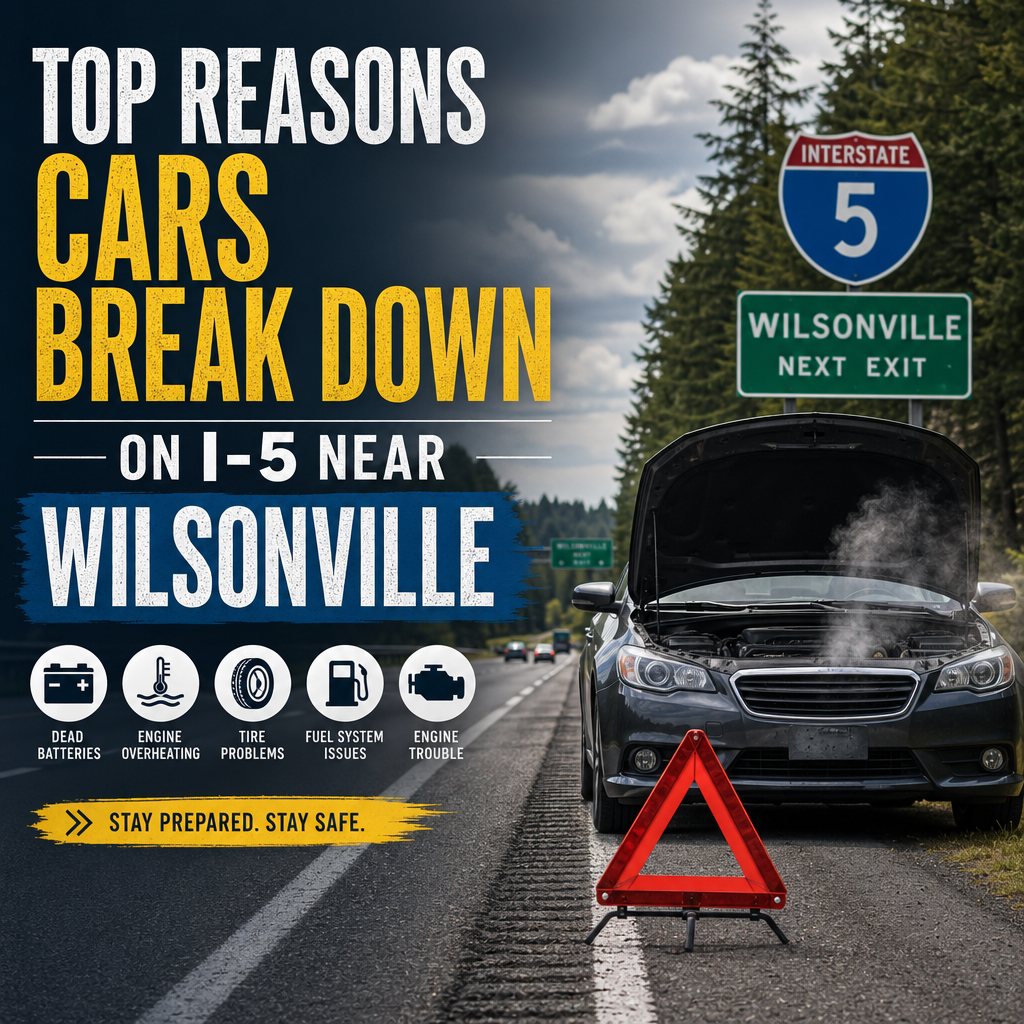
Top Reasons Cars Break Down on I-5 Near Wilsonville
Top Reasons Cars Break Down on I‑5 Near Wilsonville — And How to Prevent It
If you drive I‑5 near Wilsonville regularly, you already know how quickly a routine trip can turn stressful. Heavy commuter traffic, high speeds, construction zones, sudden weather changes, and long stretches without a convenient exit can all turn a small vehicle issue into a major roadside emergency. Understanding the most common reasons cars break down on this stretch of highway can help you stay ahead of trouble and avoid getting stranded.
Why I‑5 Near Wilsonville Can Be Tough on Vehicles
The area around Wilsonville sees a lot of daily traffic, especially from commuters heading between Portland and Salem. That means more stop-and-go driving, more lane changes, and more pressure on your car’s major systems. Add in Oregon rain, cool temperatures, and occasional summer heat, and you have a recipe for wear and tear.
Breakdowns rarely happen without warning. In many cases, they are the result of small problems that build over time. The good news is that most of them are preventable with regular maintenance and a little attention.
1. Dead or Weak Batteries
A weak battery is one of the most common reasons vehicles fail to start or stall unexpectedly. Batteries lose power over time, especially in older cars or during temperature swings. Short trips and frequent starts can also prevent the battery from fully recharging.
How to prevent it
- Test your battery before long drives or seasonal weather changes
- Replace batteries that are more than 3 to 5 years old
- Keep terminals clean and free of corrosion
- Turn off lights, electronics, and accessories when the engine is off
If your car cranks slowly in the morning or electrical features seem dim, don’t ignore it.
2. Tire Problems
Tires take a beating on the freeway. Underinflation, worn tread, potholes, and road debris can all lead to flats or blowouts. On busy stretches of I‑5, even a small tire issue can become dangerous fast.
How to prevent it
- Check tire pressure at least once a month
- Inspect tread depth and look for visible cracks or bulges
- Rotate tires regularly for even wear
- Replace damaged or worn tires before they fail
Properly inflated tires also improve fuel efficiency and handling, making your drive safer overall.
3. Overheating Engines
An overheating engine can shut your vehicle down in minutes. Low coolant, a failing radiator, a broken water pump, or a leaking hose can all cause trouble. In stop-and-go traffic near Wilsonville, your engine may work harder than usual, which increases the risk.
How to prevent it
- Check coolant levels regularly
- Look for leaks under your vehicle
- Flush and replace coolant according to your owner’s manual
- Have belts, hoses, and the radiator inspected during routine maintenance
If your temperature gauge rises above normal, pull over safely as soon as possible. Continuing to drive can cause serious engine damage.
4. Faulty Alternators
Your alternator keeps the battery charged and powers electrical systems while the engine runs. When it starts to fail, you may notice dim lights, warning indicators, or sluggish electronics before the car breaks down completely.
How to prevent it
- Pay attention to dashboard warning lights
- Listen for unusual whining or grinding noises
- Have charging system issues checked quickly
- Schedule electrical inspections if your battery keeps dying
Because alternator problems can mimic battery failure, it’s best to have a professional diagnose the issue early.
5. Running Out of Fuel
It may sound simple, but running low on gas still causes plenty of roadside calls. Traffic delays, detours, and misjudged mileage can leave drivers empty at the worst time. On a highway like I‑5, that can be especially inconvenient and unsafe.
How to prevent it
- Refuel before your tank gets below a quarter full
- Don’t rely on your dashboard range estimate alone
- Plan ahead for traffic backups or longer-than-usual trips
- Keep an eye on fuel consumption if your mileage suddenly drops
This small habit can save you from an avoidable emergency.
6. Ignoring Warning Signs
Many breakdowns happen because drivers keep going after the car starts showing symptoms. Strange noises, shaking, warning lights, fluid leaks, and burning smells all deserve attention. Waiting too long can turn a minor repair into a major failure.
How to prevent it
- Address warning lights right away
- Don’t dismiss unusual vibrations, noises, or odors
- Get regular inspections from a trusted mechanic
- Keep up with oil changes, fluid checks, and scheduled service
Preventive maintenance is often far cheaper and less stressful than emergency repairs.
Stay Ahead of Trouble on I‑5
The best way to avoid a roadside breakdown near Wilsonville is to treat your vehicle like the important machine it is. A few routine checks can make the difference between a smooth commute and a long wait for help.
Simple habits that help
- Inspect tires and fluids monthly
- Keep an emergency kit in your car
- Maintain your battery and charging system
- Service your car on schedule
- Pay attention to changes in how your vehicle sounds or feels
Whether you’re commuting daily or heading out for a weekend trip, a little prevention goes a long way. By staying proactive, you can reduce the risk of getting stranded and keep your drive on I‑5 as safe and predictable as possible.