
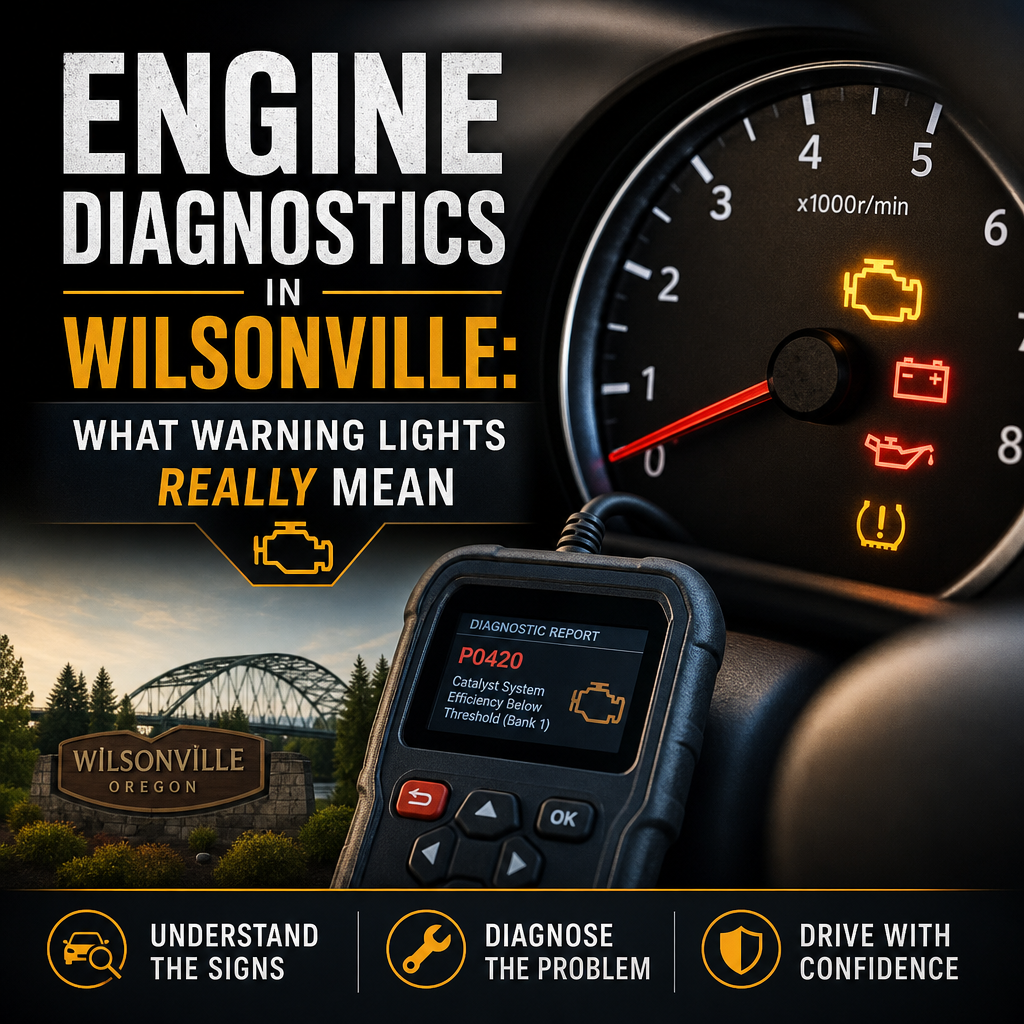
Engine Diagnostics in Wilsonville: What Warning Lights Really Mean
Engine Diagnostics in Wilsonville: What Your Warning Lights Are Really Telling You
Your dashboard warning lights are more than just a nuisance. They are your vehicle’s way of saying something needs attention, and sometimes fast. When it comes to engine diagnostics in Wilsonville, understanding those lights can help you avoid bigger repairs, better protect your engine, and stay safer on the road.
A flashing icon or an amber glow may seem easy to ignore, especially if the car still drives normally. But warning lights often point to problems that start small and get worse over time. Knowing what they mean can save you stress, money, and downtime.
Why Warning Lights Matter
Modern vehicles are built with sensors that monitor everything from engine performance to emissions and fuel delivery. When one of those systems detects a problem, it triggers a warning light on the dashboard.
Some issues are minor, while others require immediate attention. The key is not to guess. A warning light is not the diagnosis itself; it is the first clue. That is where professional engine diagnostics come in.
Common Warning Lights and What They Often Mean
Different lights mean different things, but some are more common than others.
Check Engine Light
This is the one most drivers fear. It can indicate anything from a loose gas cap to a failing catalytic converter. The severity depends on whether the light is steady or flashing.
- Steady light: Usually means the problem should be checked soon
- Flashing light: Often signals a serious engine issue that needs immediate attention
Even if the car seems fine, a check engine light should never be ignored for long.
Oil Pressure Light
This light usually looks like an oil can. If it comes on, your engine may not be getting the lubrication it needs. That can lead to major internal damage very quickly.
Pull over safely and shut off the engine if this light appears while driving. Continuing to drive could cause severe wear or complete engine failure.
Battery Warning Light
A battery light can point to a charging system problem, such as a worn alternator or a failing battery. If ignored, the car may eventually stall or refuse to start.
Temperature Warning Light
This light means the engine is overheating. It may be caused by low coolant, a bad thermostat, a broken water pump, or a radiator issue. Overheating can warp engine components, so this one should be treated as urgent.
ABS and Traction Control Lights
These lights are not always engine-related, but they can reveal problems affecting safety and vehicle performance. Sometimes they appear along with other warning lights, which can help a technician narrow down the issue during diagnostics.
What Engine Diagnostics Actually Do
Engine diagnostics involve scanning the vehicle’s computer system to retrieve trouble codes and data from sensors. But a code alone does not always tell the whole story.
A proper diagnostic process may include:
- Reading diagnostic trouble codes
- Reviewing live sensor data
- Checking fuel, air, ignition, and emissions systems
- Inspecting wiring, connectors, and vacuum lines
- Testing components to confirm the real cause
This step-by-step process helps identify the root problem instead of replacing parts blindly.
Why You Shouldn’t Delay Repairs
It is tempting to keep driving when the car still feels normal. But warning lights often appear before symptoms become obvious. Waiting too long can turn a manageable repair into an expensive one.
For example:
- A loose gas cap may seem harmless, but it can trigger emissions issues
- A misfire can damage the catalytic converter
- Low oil pressure can lead to catastrophic engine wear
- Overheating can cause long-term engine damage
The sooner the problem is diagnosed, the better the outcome usually is.
Signs You Need Diagnostics Right Away
Some warning lights are more urgent than others, especially when paired with drivability issues. Schedule engine diagnostics as soon as possible if you notice:
- Rough idling or shaking
- Poor acceleration
- Unusual engine noises
- Reduced fuel efficiency
- Smoke from the exhaust
- Burning smells
- Difficulty starting
If a warning light appears together with any of these symptoms, the vehicle likely needs immediate attention.
How Wilsonville Drivers Can Stay Ahead of Repairs
Local driving conditions, short trips, traffic, and seasonal weather changes can all affect your vehicle. Regular maintenance helps, but even well-maintained cars develop issues over time. That is why prompt engine diagnostics are so important.
A few smart habits can help you catch problems early:
- Check dashboard lights as soon as they appear
- Pay attention to changes in engine sound or performance
- Keep up with oil changes and fluid checks
- Use quality fuel and replace filters on schedule
- Don’t assume a light will turn off on its own
The Bottom Line
Warning lights are your car’s first line of communication. They are designed to alert you before a small issue becomes a major repair. With timely engine diagnostics in Wilsonville, you can find the real problem, protect your engine, and get back on the road with confidence.
If a light comes on, the best response is simple: pay attention, get it checked, and take action before the issue grows.