
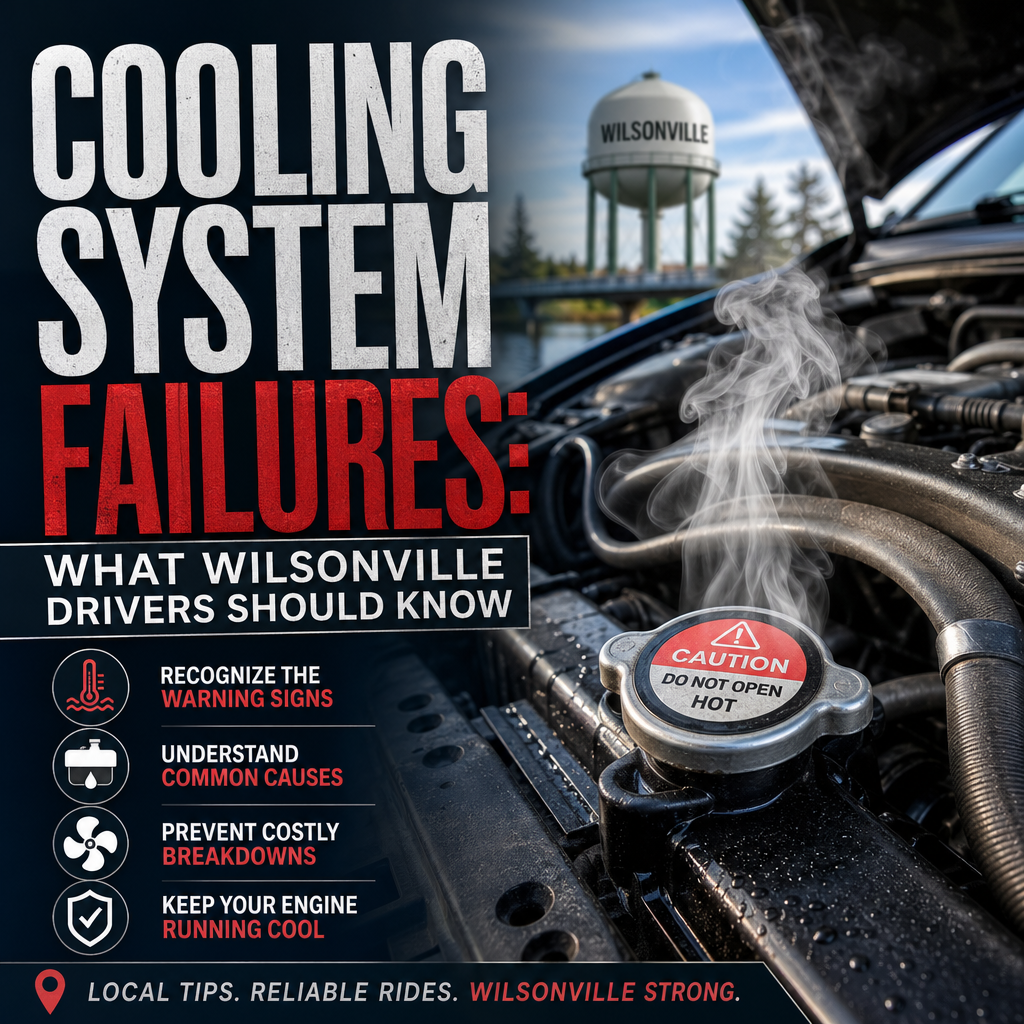
Cooling System Failures: What Wilsonville Drivers Should Know
Cooling System Failures: What Wilsonville Drivers Should Know Before It Overheats
Your car’s cooling system does more than keep the engine comfortable. It protects the engine from serious heat damage every time you drive. For Wilsonville drivers, that matters year-round, especially during summer traffic, stop-and-go commuting, and long errands around town. When cooling system failures happen, the warning signs can show up fast—and ignoring them can turn a small repair into a major one.
Understanding how your cooling system works, what can go wrong, and how to spot trouble early can help you avoid being stranded with an overheated engine.
Why the Cooling System Matters
Your engine creates a huge amount of heat as it runs. The cooling system keeps that heat in check by moving coolant through the engine and radiator, where excess heat is released into the air.
A healthy cooling system helps:
- Prevent engine overheating
- Protect hoses, belts, and seals
- Maintain proper engine performance
- Reduce the risk of expensive internal engine damage
When any part of that system starts failing, heat builds up quickly. In some cases, damage can happen before you even notice a problem.
Common Signs of Cooling System Trouble
Cooling system problems often give drivers a few clues before a breakdown happens. Knowing these signs can help you act early.
Rising Temperature Gauge
If your temperature gauge starts creeping higher than normal, don’t ignore it. Even a slight rise can mean the engine is running hotter than it should.
Steam from Under the Hood
Steam is a strong warning sign. It usually means coolant is leaking or the engine is already overheating. If this happens, pull over safely and shut off the engine.
Coolant Leaks
Coolant often leaves bright green, orange, pink, or yellow puddles under the car. A leak may come from the radiator, water pump, hoses, or reservoir.
Sweet Smell
Coolant has a sweet odor. If you notice that smell inside or outside the car, there may be a leak somewhere in the system.
Heater Not Working Properly
If your cabin heat suddenly stops working or becomes weak, it can point to low coolant or a circulation issue.
What Causes Cooling System Failures?
There are several common reasons why a cooling system starts to fail. Some are simple wear-and-tear issues, while others can develop from poor maintenance.
Low Coolant
Coolant doesn’t just disappear on its own. If the level is low, there may be a leak or another system issue that needs attention.
Damaged Hoses
Hoses carry coolant throughout the engine. Over time, they can crack, soften, or bulge, especially with age and heat exposure.
Faulty Thermostat
The thermostat controls coolant flow. If it gets stuck closed, the engine can overheat quickly. If it gets stuck open, the engine may run too cool and affect performance.
Failing Water Pump
The water pump keeps coolant circulating. When it wears out, coolant flow drops and heat builds rapidly.
Clogged Radiator
A radiator can become clogged internally with debris or scale, or externally with dirt and road buildup. Either way, it won’t release heat properly.
Broken Cooling Fan
The radiator fan helps cool the engine when the car is idling or moving slowly. If it fails, overheating can happen in traffic.
What Wilsonville Drivers Should Do if the Engine Starts to Overheat
If you think your vehicle is overheating, quick action matters.
- Turn off the air conditioning.
- Turn the heater on high if you can tolerate it. This can help pull heat away from the engine.
- Pull over safely as soon as possible.
- Shut off the engine.
- Let the car cool completely before opening the hood.
Never remove the radiator cap while the engine is hot. Pressurized coolant can cause severe burns.
If the temperature warning light comes on repeatedly or the engine overheats more than once, it’s time for a professional inspection.
How to Reduce the Risk of Cooling System Problems
You can’t prevent every issue, but a few habits can lower the risk of surprise breakdowns.
Check Coolant Levels Regularly
Look at your coolant reservoir periodically and make sure the level stays within the recommended range.
Follow Maintenance Intervals
Coolant should be flushed and replaced at the intervals listed in your owner’s manual or service plan.
Inspect Hoses and Belts
Look for cracks, swelling, leaks, or worn spots. Catching damage early can prevent bigger failures later.
Watch for Warning Lights
If the check engine light or temperature warning light comes on, don’t delay diagnosis.
Have the System Inspected Before Hot Weather
A pre-summer inspection is a smart move, especially if your vehicle is older or you’ve noticed any minor symptoms.
Don’t Wait for a Breakdown
Cooling system failures can start small but escalate fast. A tiny leak, weak hose, or failing thermostat may not seem urgent at first, but the result can be severe engine damage if the problem is left alone.
For Wilsonville drivers, staying ahead of overheating means paying attention to warning signs, keeping up with routine service, and addressing cooling issues before they turn into roadside emergencies. If your vehicle is running hot or showing signs of trouble, getting it checked early is the safest and smartest choice.