
Why Your Check Engine Light Is On: Wilsonville Diagnostic Experts
Why Your Check Engine Light Is On: Wilsonville Diagnostic Experts Break It Down
Seeing your check engine light turn on can feel unsettling. One moment your car seems fine, and the next you’re staring at a glowing dashboard warning with no obvious explanation. While it’s tempting to ignore the light and hope it goes away, this small symbol can point to anything from a loose gas cap to a serious engine issue.
The good news is that a check engine light does not always mean major repairs. In many cases, it’s your vehicle’s way of asking for attention before a small issue becomes a bigger, more expensive one. Understanding the common causes can help you respond quickly and confidently.
What the Check Engine Light Really Means
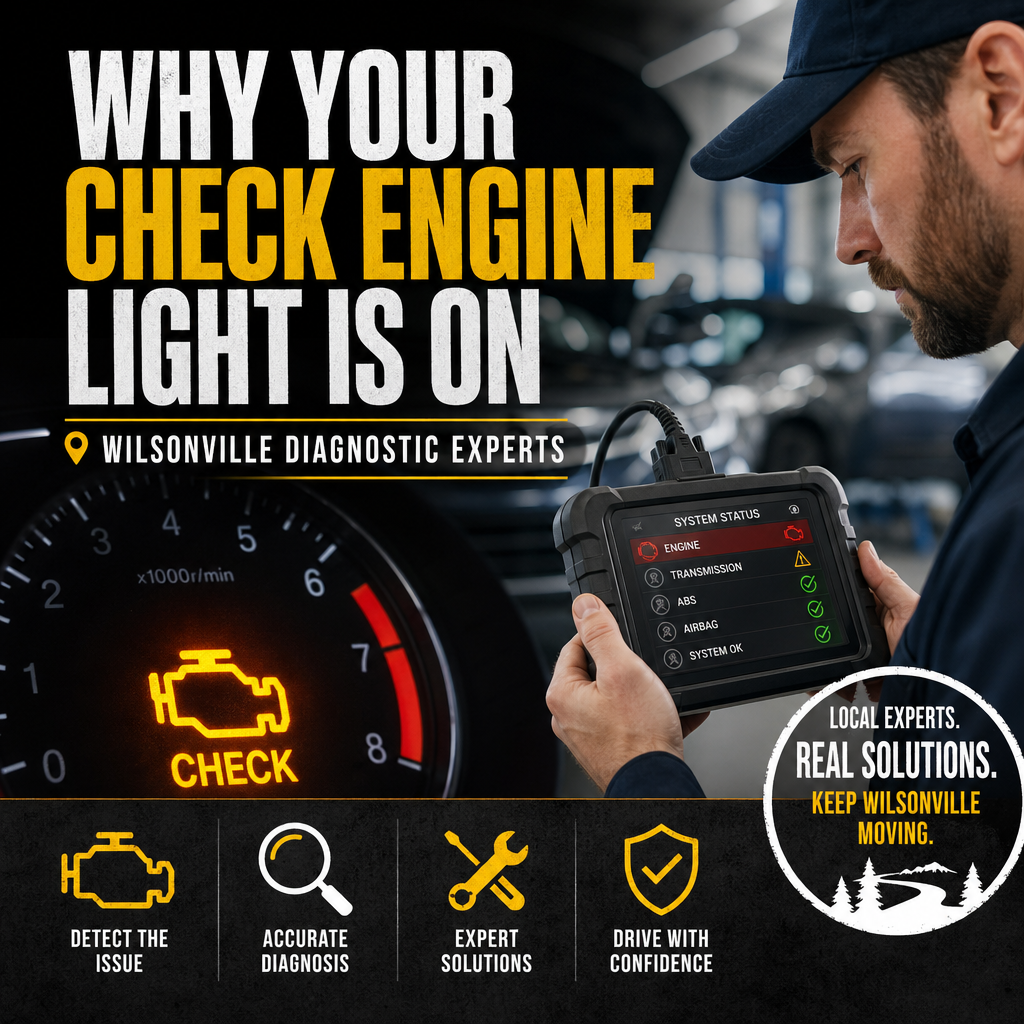
Your vehicle’s onboard computer monitors many systems in real time. When it detects something outside the normal range, it stores a trouble code and turns on the check engine light.
That light may appear in different ways:
- Solid light: Usually indicates a problem that should be checked soon.
- Flashing light: Often means a more urgent issue, such as an engine misfire, and you should stop driving if possible.
In either case, the warning is telling you that something in the system needs diagnostic attention.
Common Reasons the Light Comes On
There are many possible reasons for a check engine light, and some are surprisingly simple.
1. Loose or Faulty Gas Cap
A loose gas cap is one of the most common causes of a check engine light. If the cap isn’t sealing properly, fuel vapors can escape from the evaporative emissions system.
This issue is easy to miss, but it can trigger the warning light quickly. Tightening or replacing the gas cap may solve the problem.
2. Oxygen Sensor Problems
Your vehicle uses oxygen sensors to monitor how efficiently the engine burns fuel. If one fails, it can affect fuel economy and emissions.
A bad oxygen sensor can lead to:
- Reduced gas mileage
- Rougher engine performance
- Higher emissions
Because this sensor helps the engine computer make adjustments, it’s important to address the issue promptly.
3. Catalytic Converter Trouble
The catalytic converter helps reduce harmful exhaust emissions. If it starts to fail, you may notice sluggish performance, poor fuel economy, or unusual smells.
This is a more serious repair than a loose gas cap, and ignoring it can lead to bigger engine or exhaust problems.
4. Mass Airflow Sensor Issues
The mass airflow sensor measures how much air enters the engine. If it sends inaccurate readings, the engine may not get the right air-fuel balance.
Symptoms can include:
- Hesitation during acceleration
- Rough idling
- Stalling
- Poor fuel efficiency
A professional diagnostic scan can help pinpoint whether this sensor is the source of the issue.
5. Spark Plug or Ignition Coil Problems
Worn spark plugs or failing ignition coils can cause misfires. When the engine doesn’t fire properly, the check engine light may come on.
You might also notice:
- Shaking or rough running
- Difficulty starting
- Reduced power
Misfires should not be ignored, especially if the light is flashing.
Why You Shouldn’t Guess
It’s easy to assume the problem is minor, but modern vehicles are complex. One warning light can represent dozens of possible issues. Replacing parts without a proper diagnosis can waste time and money.
That’s where a professional check engine light diagnostic comes in. With the right tools, a technician can read the trouble codes, inspect related systems, and determine the real cause instead of relying on guesswork.
What Happens During a Diagnostic
A thorough diagnostic process usually includes:
- Reading the trouble codes from the vehicle’s computer
- Inspecting related components for visible damage or wear
- Testing sensors and systems to confirm the fault
- Verifying the fix after repairs are made
This step-by-step approach helps ensure the repair solves the actual problem, not just the symptom.
When to Schedule Service
You should schedule service as soon as possible if:
- The check engine light stays on
- The light is flashing
- Your car is shaking, stalling, or hesitating
- You notice strange smells, noises, or reduced performance
- Fuel economy has dropped suddenly
Even if the car still drives normally, a diagnostic check can prevent a minor issue from becoming a costly repair.
Wilsonville Drivers: Stay Ahead of the Problem
If your check engine light is on, don’t panic—but don’t ignore it either. The warning is your vehicle’s way of signaling that something needs attention. From a loose gas cap to a failing sensor, the cause may be simple or more involved.
The best move is to have the issue diagnosed early by trusted Wilsonville diagnostic experts who can identify the problem accurately and help you make an informed decision about repairs. A quick inspection today can save you from bigger headaches down the road.
Your dashboard warning doesn’t have to mean uncertainty. With the right diagnosis, you can get back on the road with confidence.