
Brake Repair in Wilsonville: Signs You Should Never Ignore
Brake Repair in Wilsonville: Signs You Should Never Ignore
Your brakes are one of the most important safety systems in your vehicle. When they start to wear down or fail, even a short drive can become risky. Knowing the warning signs early can help you avoid costly damage, unsafe driving conditions, and emergency repairs.
If you’ve been putting off brake repair in Wilsonville, now is the time to pay attention. Some brake problems begin with subtle changes, while others announce themselves loudly. Either way, the key is not to ignore them.
Why Brake Problems Should Never Be Delayed
Brakes do not usually fail all at once. They wear down over time, which means you often have a chance to catch problems before they become serious. Ignoring the early signs can lead to:
- Longer stopping distances
- Damage to rotors, calipers, and other components
- Reduced control during sudden stops
- Higher repair costs
- Unsafe driving for you and your passengers
Catching brake trouble early can save money and give you peace of mind every time you get behind the wheel.
Common Signs You Need Brake Repair
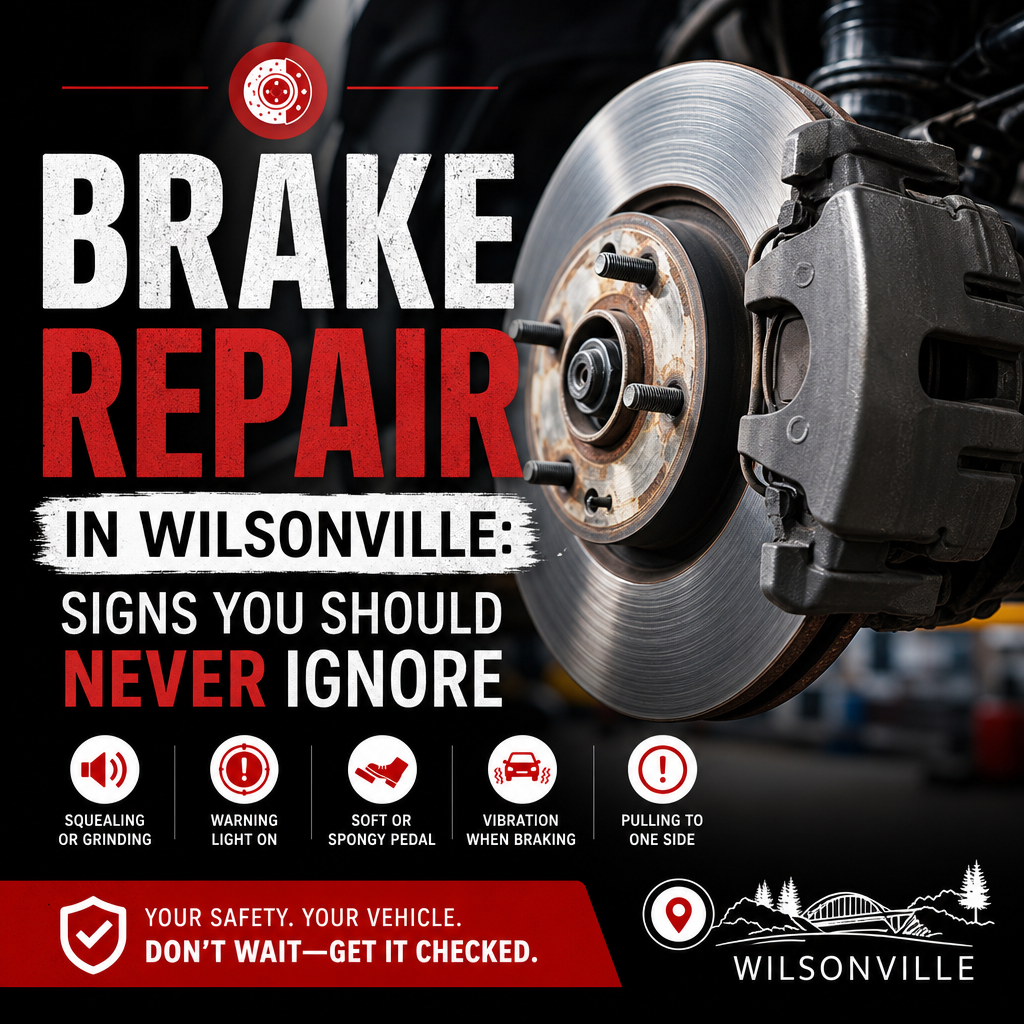
1. Squeaking or Screeching Noises
A high-pitched squeak when you press the brake pedal is one of the most common warning signs. Brake pads often have built-in wear indicators that make this noise when the pads are getting thin.
If you hear screeching, grinding, or other unusual sounds, don’t wait. These noises may mean your brake pads are worn out or that metal parts are rubbing together, which can cause additional damage.
2. Grinding Sounds
Grinding is more serious than squeaking. It often means the brake pads are completely worn down and the metal backing plate is contacting the rotor. This can lead to expensive rotor damage and a major drop in braking performance.
If your brakes are grinding, schedule service as soon as possible.
3. A Soft or Spongy Brake Pedal
Your brake pedal should feel firm and responsive. If it feels soft, spongy, or sinks toward the floor, there may be a problem with the brake fluid or hydraulic system.
Possible causes include:
- Air in the brake lines
- Brake fluid leaks
- Worn brake components
- Master cylinder issues
This is not a symptom to overlook, because it can affect how quickly your vehicle stops.
4. The Vehicle Pulls to One Side
When you brake, your car should slow down in a straight line. If it pulls left or right, there may be uneven brake pad wear, a stuck caliper, or another issue in the braking system.
This can make your vehicle harder to control, especially on wet roads or during sudden stops. Uneven braking should be inspected promptly.
5. Vibrations or Pulsing When Braking
A shaking steering wheel or pulsing brake pedal can point to warped rotors or uneven brake wear. While this may not always stop your car from functioning, it can reduce braking efficiency and make driving uncomfortable.
Vibrations are often a sign that your brakes need professional attention before the problem gets worse.
6. Brake Warning Light Comes On
Modern vehicles are equipped with dashboard warning lights that can alert you to brake system issues. If the brake light or ABS light turns on, it’s important to take it seriously.
The warning could indicate:
- Low brake fluid
- Worn brake pads
- ABS sensor problems
- Hydraulic system trouble
Even if your brakes seem to work normally, a warning light should always be checked.
7. Burning Smell After Driving
A sharp burning smell after driving may mean your brakes are overheating. This can happen if a caliper is sticking or if you’ve been riding the brakes too hard.
Overheated brakes can lose effectiveness quickly. If you smell something burning, pull over safely and have the vehicle inspected before continuing to drive.
8. Longer Stopping Distances
If your car takes longer to stop than it used to, that’s a clear sign something is wrong. Worn brake pads, low fluid, or damaged rotors can all reduce stopping power.
You may not notice the change right away, but even a small difference in stopping distance can be dangerous in traffic or during sudden stops.
What Causes Brake Wear?
Brake wear is normal, but certain habits and conditions can speed it up. These include:
- Frequent stop-and-go driving
- Heavy braking
- Driving in hills or mountains
- Poor road conditions
- Delaying routine maintenance
Regular inspections can help catch wear before it becomes a larger issue. In many cases, brake pads and fluid can be replaced before more expensive parts are affected.
How Often Should You Check Your Brakes?
There is no one-size-fits-all answer, because brake wear depends on how and where you drive. Still, it’s a good idea to have your brakes inspected during routine maintenance or whenever you notice changes in performance.
A professional inspection can help identify:
- Pad thickness
- Rotor condition
- Brake fluid levels
- Caliper function
- Leaks or other damage
Even if everything seems fine, regular checks help you stay ahead of problems.
Don’t Wait Until It Gets Worse
Brake issues rarely improve on their own. The longer you wait, the more damage can occur and the less safe your vehicle becomes. If you’ve noticed any of the warning signs above, getting prompt brake repair in Wilsonville is one of the smartest decisions you can make.
Your brakes protect you every time you drive. When they speak up, it’s worth listening.