
Wilsonville’s Most Common Engine Problems and Fast Fixes
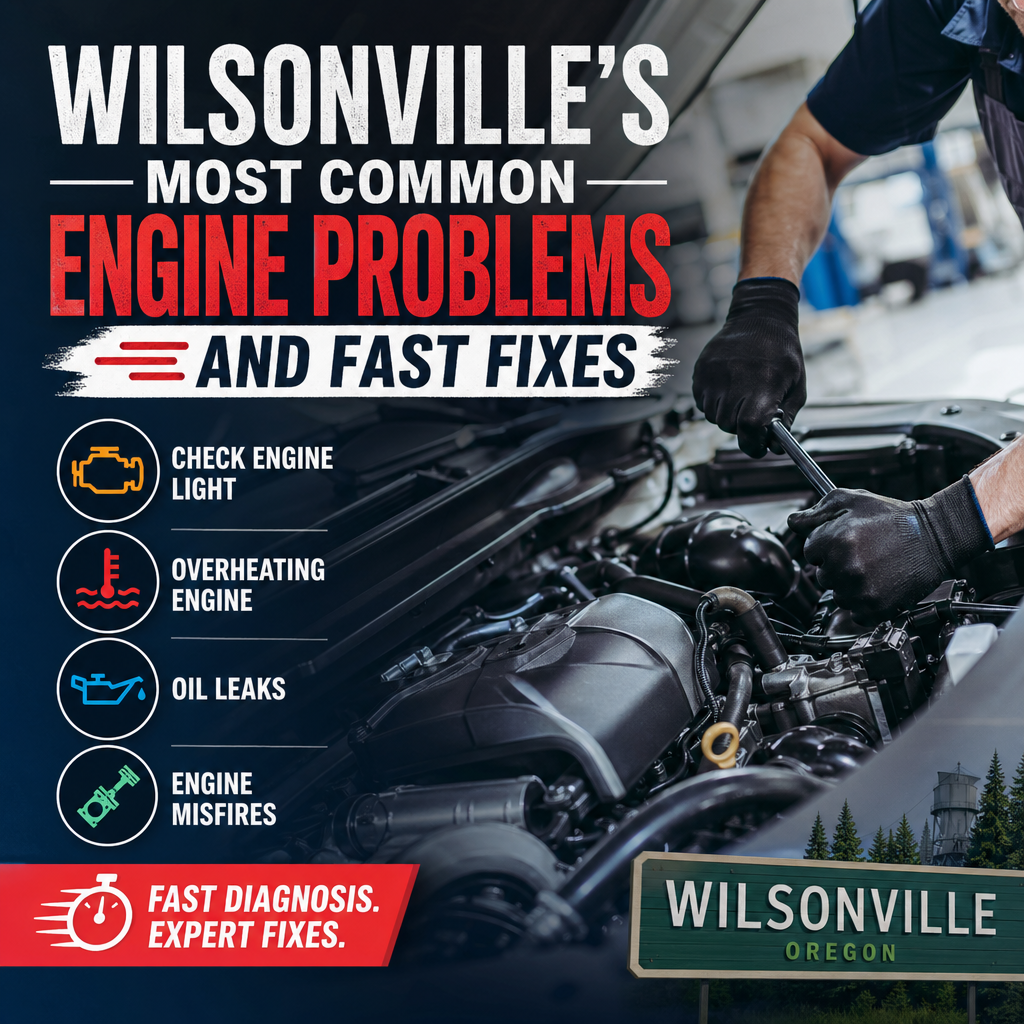
Wilsonville’s Most Common Engine Problems — And How to Fix Them Fast
Engine trouble has a way of showing up at the worst possible time. In Wilsonville, where drivers depend on their vehicles for commuting, errands, and weekend trips, even a small issue can quickly become a major headache. The good news is that many engine problems start with warning signs that are easy to spot if you know what to look for.
This guide covers some of the most common engine problems Wilsonville drivers face, along with practical ways to fix them fast before they turn into expensive repairs.
1. Rough Idling and Stalling
If your car shakes at stoplights or stalls when you come to a stop, the engine may not be getting the right air-fuel mixture. This can happen because of dirty fuel injectors, a clogged air filter, bad spark plugs, or a faulty idle control valve.
How to fix it fast:
- Replace dirty air filters
- Check and replace worn spark plugs
- Clean fuel injectors if needed
- Have the throttle body inspected
If the problem keeps happening, the issue may be deeper in the ignition or fuel system. A diagnostic scan can help pinpoint the cause quickly.
2. Overheating
Overheating is one of the most dangerous engine problems because it can cause severe damage in a short amount of time. Common causes include low coolant, a leaking radiator, a bad thermostat, a broken water pump, or a failing cooling fan.
How to fix it fast:
- Pull over safely and turn off the engine
- Check coolant levels only when the engine is cool
- Look for obvious leaks under the vehicle
- Inspect radiator hoses for cracks or looseness
Never keep driving an overheating car. Even a short trip can warp engine parts and lead to costly repairs. If coolant loss is frequent, have the cooling system pressure-tested right away.
3. Check Engine Light Issues
A check engine light can mean anything from a loose gas cap to a serious engine fault. While it does not always signal an emergency, it should never be ignored.
Common reasons include:
- Faulty oxygen sensors
- Loose or damaged gas cap
- Misfiring spark plugs
- Emissions system problems
- Sensor or wiring issues
How to fix it fast:
- Tighten the gas cap first
- Note any changes in performance, like shaking or poor acceleration
- Use an OBD-II scanner to read the trouble code
- Schedule a professional inspection if the light stays on
If the check engine light is flashing, stop driving as soon as it is safe. A flashing light often indicates an active misfire that can damage the catalytic converter.
4. Engine Misfires
A misfire happens when one or more cylinders fail to fire properly. You may notice shaking, poor acceleration, reduced fuel economy, or a rough engine sound. Misfires are often caused by spark plug problems, ignition coil failure, vacuum leaks, or fuel delivery issues.
How to fix it fast:
- Inspect spark plugs and ignition coils
- Check for vacuum hose cracks or disconnections
- Clean or replace clogged fuel injectors
- Scan for misfire codes to identify the affected cylinder
Because misfires can damage other engine components, they should be addressed quickly. The sooner you find the source, the less likely you are to face a bigger repair bill.
5. Oil Leaks and Low Oil Pressure
Oil is essential for keeping engine parts lubricated and cool. If your engine is leaking oil or running with low oil pressure, serious wear can happen fast. Signs include oil spots under the car, burning oil smells, or an oil warning light on the dash.
How to fix it fast:
- Check the dipstick and top off oil if needed
- Look for visible leaks around the valve cover, oil pan, or filter
- Replace worn gaskets or seals
- Have the oil pressure tested if the warning light appears
Do not ignore low oil pressure. Driving with insufficient oil can lead to internal engine damage or even engine failure.
6. Hard Starting
If your car cranks for a long time before starting, the cause could be a weak battery, bad starter, clogged fuel filter, failing fuel pump, or worn spark plugs. Cold mornings and temperature changes can make the issue worse.
How to fix it fast:
- Test the battery and charging system
- Listen for fuel pump operation when turning the key
- Replace old spark plugs
- Check the starter if the engine cranks slowly
A hard-starting engine is often a warning that one system is wearing out. Catching it early helps prevent a no-start situation later.
When to Get Professional Help
Some engine issues can be handled with quick maintenance, but others need professional diagnostics. If your vehicle has persistent warning lights, repeated overheating, strong knocking sounds, or major power loss, it is time to bring it in.
A trained technician can:
- Read diagnostic trouble codes
- Test ignition and fuel systems
- Inspect cooling and lubrication components
- Find hidden leaks or electrical faults
Stay Ahead of Engine Trouble
The best way to avoid costly engine repairs is to act early. Regular oil changes, coolant checks, air filter replacements, and tune-ups can go a long way toward keeping your vehicle dependable.
For Wilsonville drivers, staying alert to the early signs of engine trouble means less stress, fewer breakdowns, and more confidence on the road. When problems do appear, fast diagnosis and timely repairs can make all the difference.