
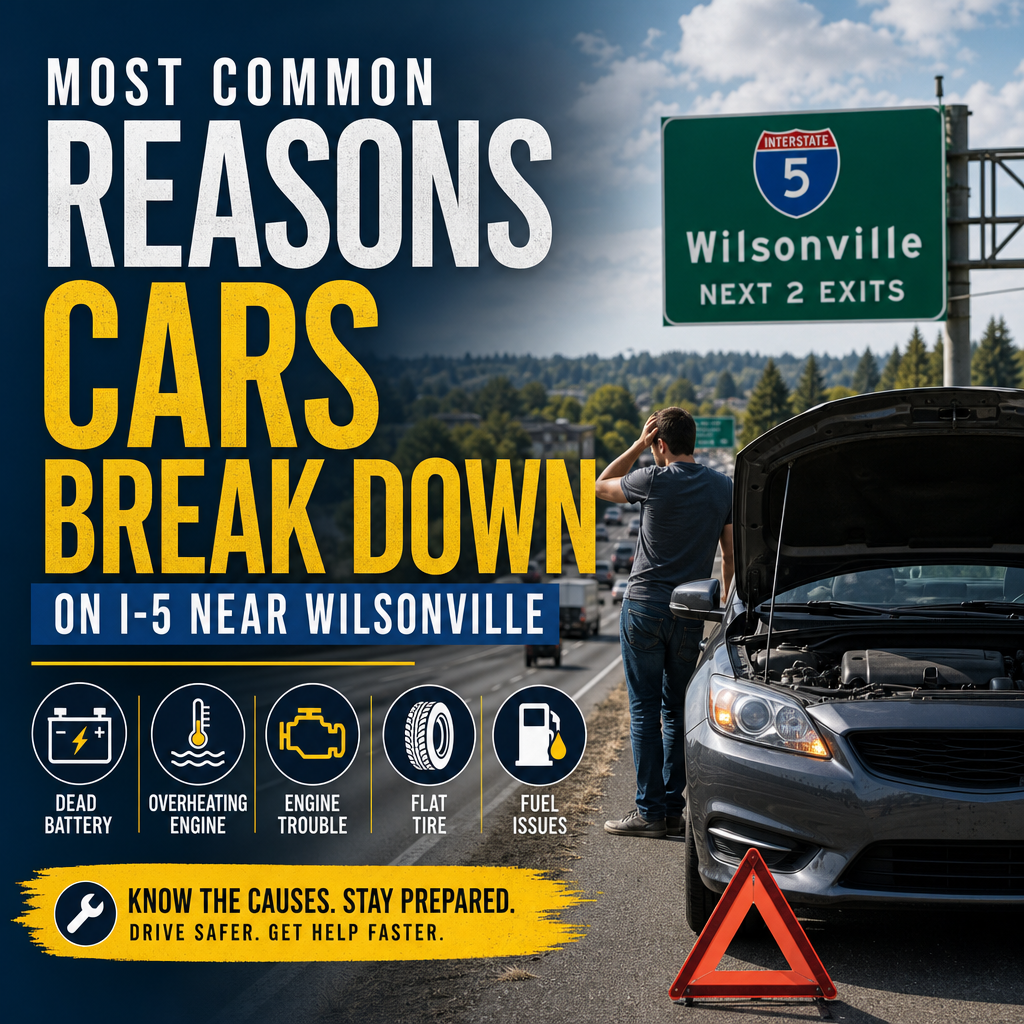
Most Common Reasons Cars Break Down on I-5 Near Wilsonville
The Most Common Reasons Cars Break Down on I-5 Near Wilsonville
Driving on I-5 near Wilsonville can feel routine until your car suddenly loses power, starts overheating, or refuses to start again after a quick stop. This stretch of highway sees steady traffic, frequent lane changes, and long commutes that can turn a minor issue into a roadside emergency fast. Knowing the most common reasons cars break down on I-5 near Wilsonville can help drivers spot trouble early and avoid being stranded.
1. Dead or Failing Batteries
A weak battery is one of the most common causes of a breakdown. Batteries often fail without much warning, especially in cars that are used for short trips or sit parked for long periods.
On a busy highway, battery trouble can show up as:
- Slow engine cranking
- Dim headlights
- Electrical accessories not working properly
- Clicking sounds when turning the key or pressing start
Cold mornings, age, and corrosion on battery terminals can all make the problem worse. If your battery is more than three years old, it is worth having it tested regularly.
2. Overheating Engines
Overheating is another major reason drivers end up on the shoulder. Stop-and-go traffic, summer heat, and low coolant levels can push an engine past its limit.
Common signs include:
- Temperature gauge rising quickly
- Steam coming from under the hood
- Sweet smell from coolant leaks
- Warning lights on the dashboard
An engine that overheats can suffer serious damage if you keep driving. A broken radiator hose, leaking water pump, or failing thermostat can all trigger the problem. Pulling over quickly and shutting the car off can help prevent expensive repairs.
3. Flat Tires and Blowouts
Tire problems are especially common on highways like I-5 where speeds are higher and debris can be harder to avoid. A puncture, worn tread, or underinflated tire can lead to a flat or even a blowout.
Drivers may notice:
- A sudden loud pop
- The car pulling to one side
- A vibrating steering wheel
- A low tire pressure warning light
Tire failures often happen because of nails, potholes, uneven wear, or lack of regular pressure checks. Since tire issues can become dangerous very quickly at highway speeds, keeping tires properly inflated and rotated is essential.
4. Running Out of Fuel
It sounds simple, but running out of gas still causes plenty of roadside stops. Long stretches of driving, traffic delays, and inaccurate fuel gauges can catch drivers off guard.
This is more likely when:
- Drivers ignore the fuel warning light
- Traffic is heavier than expected
- A fuel gauge is faulty
- A detour adds unexpected miles
Running out of fuel can be more than inconvenient. It may leave a vehicle unable to restart, especially if the system pulls in air or debris after the tank empties. Keeping the tank above a quarter full is a smart habit for any regular commuter.
5. Alternator Problems
The alternator keeps the battery charged while the car is running. If it fails, the vehicle may run for a short time and then shut down completely.
Warning signs include:
- Battery warning light
- Flickering headlights
- Electrical systems losing power
- A burning smell from the engine bay
Because the alternator affects the battery and electrical system, a failure can quickly leave a car unable to continue. This can be especially frustrating on a freeway, where the vehicle may seem fine one moment and completely dead the next.
6. Broken Belts and Hoses
Belts and hoses may not get much attention, but they are critical to keeping the engine running smoothly. A snapped serpentine belt or leaking hose can cause a sudden breakdown.
These parts can fail due to:
- Age and wear
- Heat exposure
- Cracks or fraying
- Improper tension
If a belt breaks, systems like the alternator, power steering, or water pump may stop working. If a hose fails, coolant loss can lead to overheating in minutes. Regular inspections can catch these issues before they become emergencies.
7. Transmission Trouble
Transmission problems can leave a driver unable to shift, accelerate, or move at all. This is one of the more serious breakdown causes because it often requires professional repair.
Possible signs include:
- Slipping gears
- Delayed acceleration
- Grinding or whining noises
- Transmission fluid leaks
Low fluid, overheating, and worn internal parts can all contribute to failure. If the vehicle starts jerking or refusing to shift properly, it is best to exit the highway as soon as it is safe.
How to Reduce the Risk of a Breakdown
While no car is immune to mechanical problems, a few habits can lower the odds of getting stranded on I-5 near Wilsonville.
Helpful maintenance steps:
- Check tire pressure and tread regularly
- Replace old batteries before they fail
- Keep coolant, oil, and transmission fluid at proper levels
- Watch dashboard warning lights closely
- Schedule routine inspections before long drives
Even small maintenance tasks can make a big difference when you are driving at freeway speed.
Stay Prepared for the Road
The most common reasons cars break down on I-5 near Wilsonville are usually preventable or at least detectable early. Batteries, tires, overheating, and fluid-related issues cause many roadside emergencies, but regular maintenance and quick attention to warning signs can help keep your vehicle moving safely.
When you spend a lot of time on the highway, preparation matters. A well-maintained car is less likely to leave you stranded and more likely to handle everyday driving with confidence.