
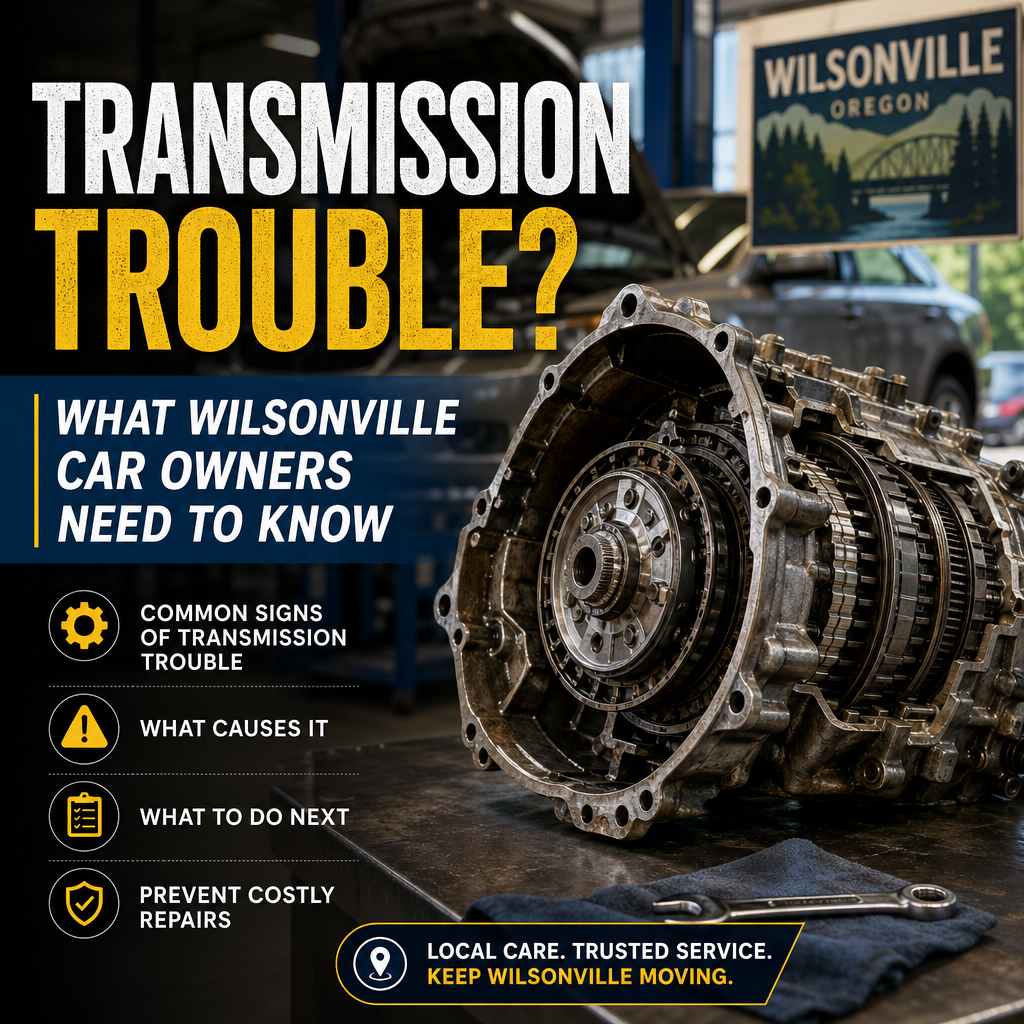
Transmission Trouble? What Wilsonville Car Owners Need to Know
Transmission Trouble? Here’s What Wilsonville Car Owners Need to Know
If your car has started slipping between gears, hesitating when you accelerate, or making odd noises you can’t quite place, your transmission may be trying to tell you something. For Wilsonville car owners, catching transmission issues early can mean the difference between a manageable repair and a major breakdown. The good news is that many transmission problems give warning signs before they become serious.
Understanding what to look for can help you protect your vehicle, save money, and stay safer on the road.
What Does the Transmission Actually Do?
Your transmission is responsible for delivering power from the engine to the wheels in a way that keeps your car moving efficiently. It adjusts the gear ratio so your engine can perform well at different speeds and driving conditions.
In simple terms, the transmission helps your car shift smoothly and keep running properly. When it starts to fail, you may notice changes in how your vehicle drives long before it stops working completely.
Common Signs of Transmission Trouble
Transmission problems can show up in different ways depending on whether your car has an automatic or manual transmission. Still, there are a few warning signs Wilsonville drivers should never ignore.
1. Slipping gears
If your car unexpectedly changes gears or feels like it’s struggling to stay in gear, that’s a major red flag. You may also notice the engine revving higher than usual without a corresponding increase in speed.
2. Delayed or rough shifting
A healthy transmission should shift smoothly. If you feel a delay when shifting from park to drive, or if gear changes feel harsh and jerky, something may be wrong.
3. Unusual noises
Grinding, whining, buzzing, or humming sounds can signal internal transmission issues. These noises often get worse when the car is in gear.
4. Fluid leaks
Transmission fluid is typically red or reddish-brown and may have a sweet smell. If you spot a leak under your car, it could point to a damaged seal, gasket, or line.
5. Warning lights
Modern vehicles often alert drivers with a check engine light or transmission warning light. While these lights can mean many things, they should always be checked promptly.
6. Burning smell
A burnt smell may indicate overheating transmission fluid. This can happen when fluid is old, low, or no longer doing its job properly.
Why Transmission Problems Happen
There’s no single cause of transmission trouble. In many cases, it develops over time due to wear, heat, or poor maintenance. Some common causes include:
- Low or contaminated transmission fluid
- Lack of routine fluid changes
- Worn clutch components in manual transmissions
- Faulty solenoids or sensors
- Overheating from heavy use or towing
- Internal mechanical damage
Wilsonville drivers who spend a lot of time in stop-and-go traffic or take frequent short trips may also put extra stress on their transmissions.
Why Early Diagnosis Matters
Ignoring transmission symptoms can lead to bigger problems. What starts as a minor fluid issue can turn into damaged gears, internal component failure, or complete transmission breakdown.
Early diagnosis can help you:
- Avoid more expensive repairs
- Prevent unsafe driving conditions
- Extend the life of your vehicle
- Catch minor issues before they escalate
If your car is acting differently, it’s worth having a professional inspect it sooner rather than later.
What You Can Check at Home
While transmission repairs should be left to a qualified technician, there are a few simple things Wilsonville car owners can monitor between service visits.
Check your transmission fluid
If your vehicle allows it, check the fluid level and condition according to the owner’s manual. Healthy fluid should usually be clean and not smell burnt. Low or dirty fluid may indicate a problem.
Pay attention to driving changes
Take note if your car begins shifting differently, hesitating, or making new sounds. The more details you can provide to a mechanic, the easier it is to diagnose the issue.
Watch for leaks
Look at the ground where your car is parked. Even small puddles or spots can be a clue that something is wrong.
When to See a Mechanic
If you notice any transmission warning signs, don’t wait for the problem to get worse. A trained mechanic can run diagnostics, inspect the fluid, and determine whether the issue is minor or more serious.
You should schedule a service visit right away if your car:
- Won’t shift properly
- Has a strong burning smell
- Leaks transmission fluid
- Makes grinding or whining noises
- Slips out of gear while driving
Driving with transmission trouble can be risky, especially if the car suddenly loses power or becomes difficult to control.
Staying Ahead of Transmission Repairs
Routine maintenance is one of the best ways to protect your transmission. Following your manufacturer’s service schedule, using the correct fluid, and addressing problems quickly can go a long way toward keeping your vehicle in good shape.
For Wilsonville car owners, staying proactive is especially important. Local driving conditions, weather changes, and everyday wear can all affect how well your transmission performs over time.
Final Thoughts
Transmission trouble doesn’t always show up suddenly. In many cases, your car gives you clues long before a major failure happens. By learning the warning signs and acting quickly, Wilsonville drivers can avoid bigger repair bills and keep their vehicles on the road longer.
If your car feels off, sounds unusual, or isn’t shifting the way it should, trust your instincts and have it checked. A timely inspection today could save you from a costly repair tomorrow.